Open Hours: Mon-Sat: 10:00 AM to 07:00 PM (Sunday Closed)

Hair loss can affect both men and women, and choosing the right treatment can be confusing. Two options that are frequently discussed are hair transplant and PRP (Platelet-Rich Plasma) therapy.
But these treatments work in very different ways.
A hair transplant is a surgical hair-restoration procedure that moves hair follicles from one area of the scalp to another. PRP, on the other hand, is a minimally invasive treatment that uses a patient’s own platelet-rich plasma to support the hair-growth environment.
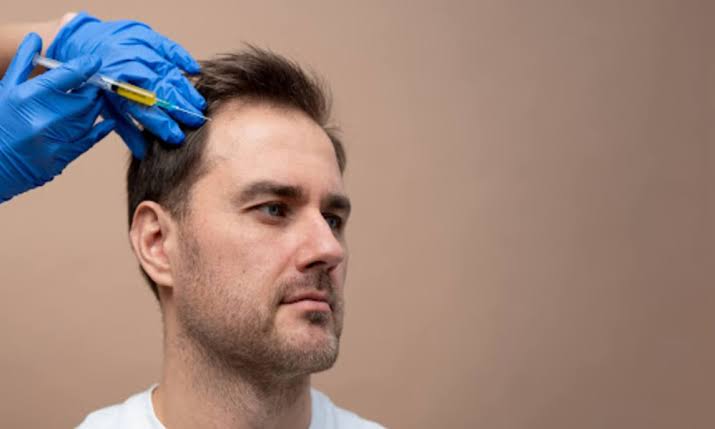
So, hair transplant vs PRP—which one is right for you?
The answer depends on the cause and stage of hair loss, the availability of donor hair, the condition of your scalp, and your individual treatment goals.
Hair Transplant vs PRP: What’s the Difference?
The biggest difference is what each treatment is designed to achieve.
Hair transplant focuses on physically relocating healthy hair follicles to areas where hair has become significantly thin or absent.
PRP therapy aims to support existing hair follicles and may help improve hair density and reduce hair loss in some patients.
In simple terms:
Hair Transplant = Hair Restoration
PRP = Hair Follicle Support
Neither treatment is automatically better for everyone.
What Is a Hair Transplant?
A hair transplant is a surgical procedure used to restore hair in areas affected by significant thinning or baldness.
During the procedure, healthy hair follicles are taken from a donor area—usually an area of the scalp with stronger, more resistant hair—and transplanted into areas where hair restoration is needed.
Modern hair transplantation may use techniques such as:
- Follicular Unit Extraction (FUE)
- Follicular Unit Transplantation (FUT)
The exact technique depends on the patient’s hair loss pattern, donor area, hair characteristics, and treatment goals.
Who May Be a Candidate for a Hair Transplant?
A hair transplant may be considered when a person has:
- Noticeable hair thinning or bald areas
- A stable or predictable pattern of hair loss
- Adequate donor hair
- Healthy scalp skin
- Realistic expectations about the outcome
A consultation is important because not every type of hair loss is suitable for transplantation.
What Is PRP Hair Treatment?
PRP stands for Platelet-Rich Plasma.
In PRP therapy, a small amount of the patient’s blood is collected and processed to concentrate platelets. The platelet-rich portion is then prepared for treatment and injected into selected areas of the scalp.
PRP contains various growth factors and signaling proteins that may influence the hair follicle environment.
Clinical research has found that PRP can improve hair density in some people with pattern hair loss, although studies have used different preparation methods and treatment schedules, making results difficult to compare directly.
Hair Transplant vs PRP: Key Differences
| Feature | Hair Transplant | PRP |
|---|---|---|
| Type of treatment | Surgical | Minimally invasive |
| Main purpose | Restore hair in thinning/bald areas | Support existing hair follicles |
| Uses donor follicles | Yes | No |
| Uses patient’s own blood | No | Yes |
| Suitable for significant baldness | May be suitable in selected patients | Usually not a replacement for transplanted hair |
| Recovery | Requires a recovery period | Usually shorter recovery |
| Results | Hair growth develops gradually after transplantation | Response varies between individuals |
| Consultation required | Yes | Yes |
Which Is Better: Hair Transplant or PRP?
There is no universal answer.
The right option depends on why you are losing hair and how advanced the hair loss is.
For someone with early-stage thinning and viable hair follicles, a non-surgical treatment such as PRP may be considered as part of a treatment plan.
For someone with established areas of baldness and sufficient donor hair, a hair transplant may be considered for restoring coverage.
In some cases, treatments may also be used together rather than viewed as competing options.
A 2025 systematic review of PRP used alongside hair transplantation found promising improvements in outcomes such as hair density and follicle survival, but the researchers also highlighted differences in PRP protocols and the need for higher-quality standardized studies.
Can PRP Replace a Hair Transplant?
Usually, PRP should not be thought of as a direct replacement for a hair transplant.
PRP does not transfer new hair follicles into a bald area.
If a patient has lost a significant number of follicles in a particular area, PRP cannot physically recreate those follicles.
Instead, PRP may be considered when there are still functioning follicles that could potentially benefit from treatment.
The suitability of PRP depends on the type and stage of hair loss.
When Might PRP Be Considered?
PRP may be considered for people experiencing certain types of hair thinning, particularly pattern hair loss.
It may be discussed when:
- Hair is thinning but follicles are still present
- Early-stage hair loss is being managed
- A patient wants a minimally invasive treatment option
- Additional support is desired alongside another hair-loss treatment
- A specialist believes the patient is likely to benefit
Research suggests PRP may improve hair density in androgenetic alopecia, but treatment protocols vary considerably between studies.
When Might a Hair Transplant Be Considered?
A hair transplant may be considered when hair loss has progressed to the point where certain areas have become visibly sparse or bald.
A specialist may evaluate:
- Hairline recession
- Crown thinning
- Overall density
- Donor hair availability
- Pattern and progression of hair loss
- Scalp health
- Age and expectations
A good candidate is not determined by the amount of hair loss alone. The donor area and long-term pattern of hair loss are also important.
Can Hair Transplant and PRP Be Combined?
In selected cases, PRP may be used alongside hair transplantation.
The goal may be to support the scalp and transplanted follicles as part of an overall hair-restoration plan.
Some clinical studies have reported improved hair density, follicle survival, or earlier hair growth when PRP is used as an adjunct to transplantation. However, current evidence is still limited by differences in treatment protocols and study design.
Whether combining treatments makes sense should be decided after an individual assessment.
Hair Transplant Recovery vs PRP Recovery
The recovery experience is different.
Hair Transplant Recovery
Because a hair transplant is a surgical procedure, patients can expect a longer recovery period than with PRP.
Temporary effects may include:
- Redness
- Swelling
- Tenderness
- Scabbing
- Temporary shedding
The transplanted hair does not appear fully grown immediately. Hair growth develops gradually over the following months.
PRP Recovery
PRP is minimally invasive and generally involves a shorter recovery period.
Some people may experience temporary:
- Mild scalp tenderness
- Redness
- Swelling
- Discomfort at injection sites
Your specialist will provide specific aftercare instructions based on your treatment.
How Long Does It Take to See Results?
Hair treatments require patience.