Open Hours: Mon-Sat: 10:00 AM to 07:00 PM (Sunday Closed)
Dandruff vs Dry Scalp: What’s the Difference and How to Manage It?
Flakes on your shoulders or an itchy scalp can be frustrating, but not every flaky scalp is caused by dandruff. Dandruff vs dry scalp is a common confusion because both conditions can produce visible flakes.
Understanding the difference can help you choose better scalp-care practices and know when professional advice may be needed.
What Is a Dry Scalp?
A dry scalp generally occurs when the scalp does not retain enough moisture. Environmental conditions, frequent washing, hot water and unsuitable hair products may contribute to dryness.
A dry scalp may feel:
- Tight
- Dry
- Itchy
- Rough
- Flaky
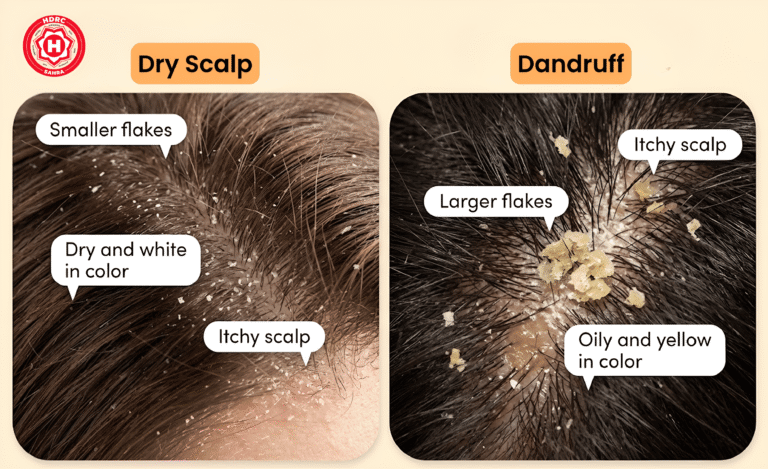
The flakes associated with dryness are often smaller and may appear more powdery.
What Is Dandruff?
Dandruff is a common scalp condition that causes visible flakes. It can be associated with increased oiliness, scalp irritation and changes involving naturally occurring microorganisms on the scalp.
Dandruff may be accompanied by:
- White or yellowish flakes
- Itching
- Oily scalp
- Scalp irritation
- Recurring flakes
The exact cause can vary from person to person.
Dandruff vs Dry Scalp: Key Differences
| Feature | Dry Scalp | Dandruff |
|---|---|---|
| Scalp condition | Often dry | Can be oily or irritated |
| Flakes | Usually smaller and dry | Can be larger or more noticeable |
| Oiliness | Usually lower | May be associated with oily scalp |
| Itching | Possible | Common |
| Main concern | Lack of moisture | Scalp flaking and irritation |
These signs can overlap, so a professional assessment may be helpful when the problem is persistent.
Common Causes of Scalp Flaking
Flaking can be influenced by several factors, including:
- Frequent shampooing
- Very hot water
- Harsh hair products
- Dry weather
- Excess oil production
- Scalp sensitivity
- Certain scalp conditions
Using the wrong treatment for the underlying problem may not provide the desired results.
Simple Scalp Care Tips
Choose Suitable Hair Products
Use products appropriate for your scalp type rather than choosing products solely based on hair length or appearance.
Avoid Very Hot Water
Very hot water can make an already dry or sensitive scalp feel more uncomfortable.
Don’t Scratch Your Scalp
Repeated scratching can irritate the scalp and potentially worsen discomfort.
Keep Your Scalp Clean
Regular cleansing can help manage oil and product buildup. The ideal frequency depends on your scalp and hair type.
Seek Professional Advice for Persistent Problems
If itching, flaking, redness or scalp discomfort continues, consult a skin or hair specialist for an appropriate assessment.
Can Dandruff Cause Hair Fall?
Dandruff itself is not necessarily a direct cause of permanent hair loss. However, persistent scalp irritation and frequent scratching may contribute to hair breakage or temporary increased shedding in some people.
If you are experiencing noticeable or ongoing hair fall along with scalp problems, it is better to have the condition professionally evaluated rather than assuming dandruff is the only cause.
For professional hair and scalp treatment in Nagpur, you can consult HDRC Sahra Skin & Hair Clinic.
Final Thoughts
Knowing the difference between dandruff vs dry scalp can help you make better decisions about scalp care. However, similar symptoms can sometimes occur with different scalp conditions.
If your scalp problems are persistent, recurring or getting worse, professional evaluation can help identify the cause and appropriate treatment.